

'Touching Solid Ground'
The ecological crisis, deepening time, and living as if other futures were already present

A recent post by contemplative mystic Cynthia Bourgeault pivoted her discussion on the planetary crisis from an exploration of consciousness and worldview (a “Gebserian Take”) to the deep-time perspective Jesuit scholar and mystic Pierre Teilhard de Chardin. During our conversation last month, we talked about the spiritual import of Jean Gebser, who understood our present as a time of breakdown and breakthrough of worldviews (or ‘structures’ of consciousness, as Gebser would assert).
What we need is a new consciousness of time, and so it’s a good thing, then, that a new consciousness of time seems to have already taken hold of us in nearly every facet of modern life.
Here’s the catch: the new time is experienced indirectly as a kind of cultural unconscious. It shows up as ecological catastrophe (solastalgia, ‘mourning the future’) or the rampant ‘time crisis’ of neoliberalism (which emphasizes the opposite pull towards the past, or ‘formal nostalgia’).
In our call, Bourgeault memorably suggested that “attention is the new time,” and that it is precisely through contemplative practices of reclaiming time, attending to the present, that the presence of the new has its chance to ripen in us.
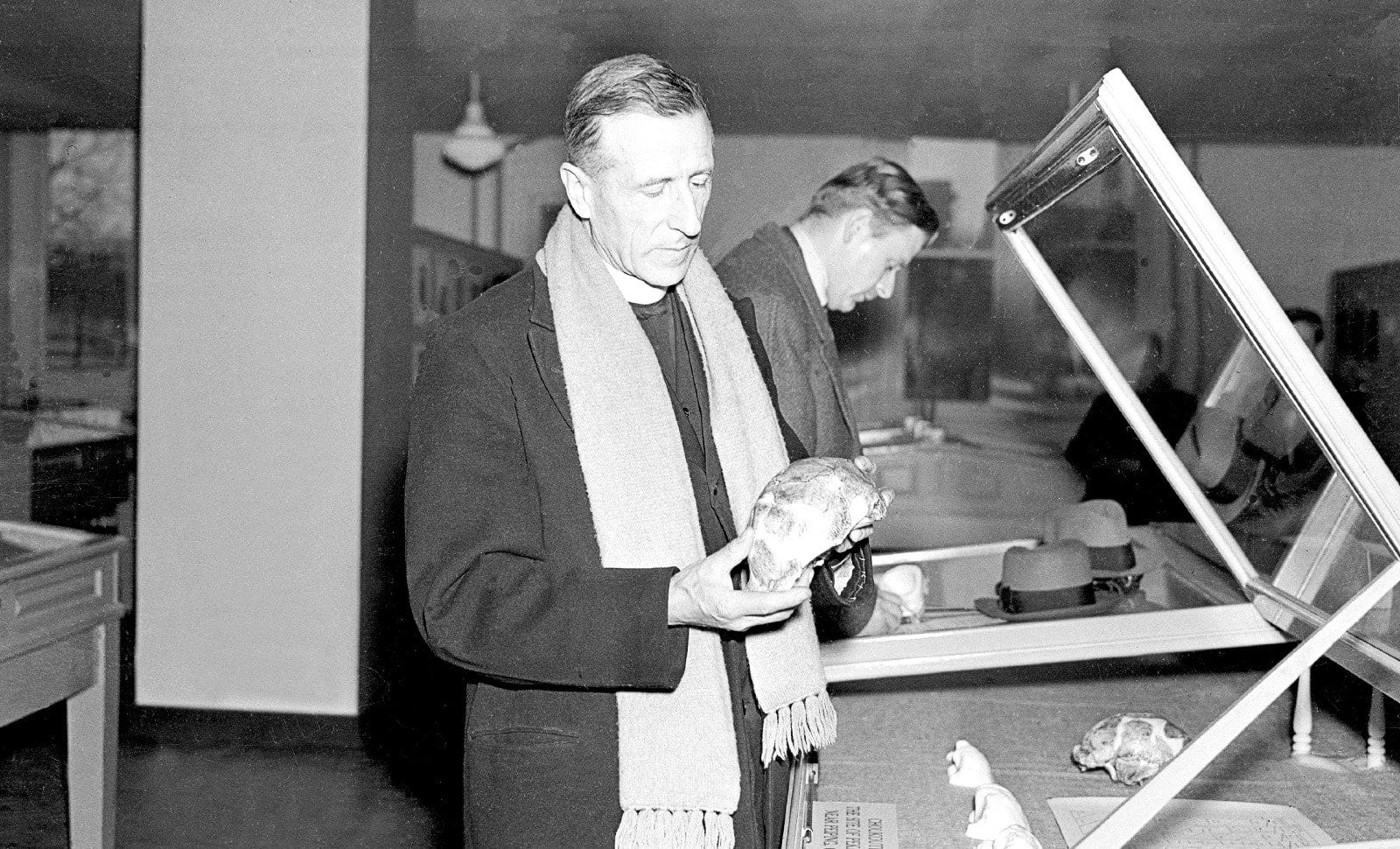
Teilhard, no less of a temporal thinker than Gebser, adds another contribution of depth to this exploration. Gebser’s whole project emphasizes transformations of human consciousness, but Teilhard, who is inspired by the work of Henri Bergson, is keen to describe a sweeping history of planetary evolution. So while we should ‘stay with the trouble,’ as Donna Haraway reminds us, Teilhard isn’t asking us to bypass the problems of the present but touch something more like “solid ground.” As Bourgeault writes,
For at this [deep time] scale it becomes clear that our only real hope of a breakthrough will come when a critical mass of human beings begin to exercise their capacity to think planetarily—i.e., as a single species: rising above nationalist divisions, theological story-telling, sacred-cow histories, and ideological illusions to begin to work as whole greater than the sum of its parts breaking into totally new ground.
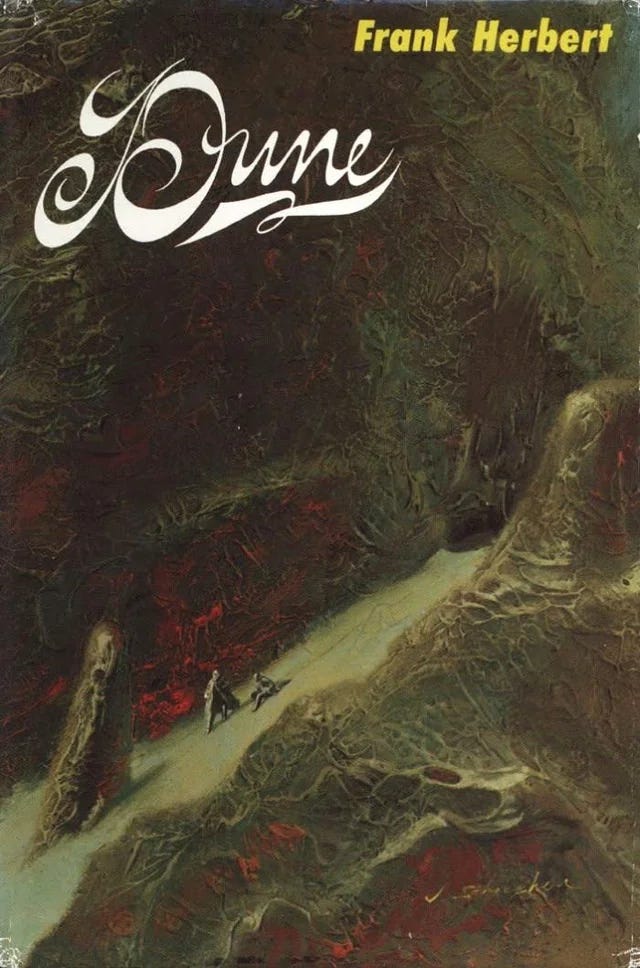
I think this long view of planetary evolution is precisely what becomes available when we attend to our present. Perhaps this is as much a Bergsonian notion as it is Gebserian: that as we attend our awareness to the present, the present exfoliates time in all directions. We deepen our capacity to perceive time as undivided, but nonetheless intuitive, intelligible, and relational1. Perhaps it is this capacity to be with time in both its most immediate and most vast, most distant sense that helps us begin to perceive relations between events in an asynchronous and networked fashion. Perhaps this is the kind of thing that novelists like Frank Herbert speculatively intuited in his Dune books as prescience (although imperfectly, as it can’t just be the achievement of one individual).2 In any case, if homo sapiens are to continue to have a place in this world, developing a temporal and planetary style of thought becomes a matter of urgent necessity.
This kind of thinking is not thought in the sense of the cogito of Western philosophy. Its position is no longer the mastermind, the arbiter of the real and divider of space. Because of the fundamental precarity of Earth’s living systems (and in a more metaphysical and Bergsonian sense, the sheer creativity and radical newness that comprises the flow of time) we can never exhaustively know what will unfold, or what latent consequences our actions will befall. So we must remain open, receptive, and listen to the reverberations of the whole complex web of interrelationships. This is how we learn to walk with the world. This is how we take our first tentative steps into the future.
Gebser’s insights on time help us to regard Teilhard’s sweeping evolutionary vision with a greater sense of groundedness and relationality. And Gebser helps us to mind the very nature of this exercise: whenever we think of ourselves and our present world in the context of millions, or even billions of years, we are engaging in practices of imaginative, temporal fabulation. Deep time helps us perceive the present in a new light, but as Gebser reminds us and as Bergson consistently reiterates, time is not space, and the new mutation aspires to regard the undivided present as the integral relation between past and future. Putting it succinctly: the future is present too.
But to bring it back home: what sort of future?
As Bourgeault talks about, we are thinking about all this in order to better contemplate the true precarity of it all. The chance that it won’t work out for us (as in all of us, our common Earth), and the creative becoming of matter will continue on elsewhere in the universe (in the words of Star Trek’s captain Kirk: “out there… thataway"). And so I would like to close this morning writing exercise with one more thought.
We merely glanced at it earlier when I talked about how the future often arrives in an unconscious form as crisis. It shows up where we wouldn’t think to look. It can be found in the peculiar novelties that disrupt business as usual, and these tend to occur when living through a time of civilizational collapse. Like Bourgeault suggests, let us stay with the dark for a moment. For it is in the broken places, the places of noise and rupture and even heartbreak, that the new finds its way into our world.
Since we live in an age of slow-motion catastrophe, our culture has become flooded with neologisms, all of which are attempting to name this new structure of feeling (I will forgo a digression on terms like ‘polycrisis’ or ‘metacrisis’ for now).
As mentioned earlier, solastalgia describes what it feels like to mourn for vanishing species and ecological landscapes affected by the climate crisis (Sophie Strand has a profoundly moving meditation on solastalgia and the last male Kauaʻi ʻōʻō bird here). It describes something that is still present, but its presence also contains an absence, or what we could call a becoming-absent (echoing J.R.R. Tolkien’s Middle-Earth notion of ‘the long defeat’). Think of it like the Buddhist notion of dukkha, stated in future imperfect tense.
I bring this word up again because it’s directly relevant to our question of how stay in contact with Bourgeault’s “solid ground,” and how we can find a way to hold the precarity and possibility of our times with both a sense of grace and renewed agency.
Perhaps that sounds like too much of an ask for such times, and we should instead trust our heart’s grief, allow ourselves to unravel. I think this is good medicine, too. But I want to suggest that trusting our grief, and living the new, are not separate things. In the very depths of our grief for a vanishing world, other futures are already present. I want to say that the future arrives in the shape of our grief.
This is why it’s important to keep sifting through our culture’s present-day attempts to name our experience of the ecological crisis and process the feeling of living through a fundamental collapse of worldview. Whether we are looking artistic expressions like new music genres, narrative expressions like science fiction, or theoretical expressions like philosophy (i.e., posthumanism), what we find is that at the periphery and amidst the noise of the capitalist present, the music of planetary culture has already begun singing.
Historian William Irwin Thompson was fond of saying that “we tell more than we know.” This applies not only to our ancient myths, but our modern day art and culture making.
Contemporary culture is dominated by creations of ‘formal nostalgia,’ a retrospective gaze. But even our attempts to escape the present and return to a romanticized past, to a time where the future was still open and people still had faith in the future-as-progress, are already employing a fundamentally weirder temporality (they are haunted by the lost futures of modernity, futures which they wish to resurrect). Even those who would be against such an ecological worldview, and would prefer to have nothing to do with any of this kind of thinking, are imbricated in it. They are already mutants. Nostalgia tells more than it knows.
We need to consider how both nostalgia and solastalgia are (partial) manifestations of Gebser’s ‘integral’ mutation, and Teilhard’s planetization. Jumping back and forth between past and future, they begin to employ a more elastic and relational time, a weird planetary time that exists beyond the clock.
When we attend to the present, we begin to sense how the future as well as the past are real and effectual. Ecological futures, especially, have become more real for us these days. One could readily argue, as philosophers like Srecko Horvat do in After the Apocalypse, that climate futures have been radically transforming our subjectivity. The grief many of us feel for species like the Kauaʻi ʻōʻō bird is becoming kind of ‘productive melancholy,’ as Walter Benjamin wrote about, empowering us to act before it is too late, and subvert the deadly momentum of the neoliberal present.
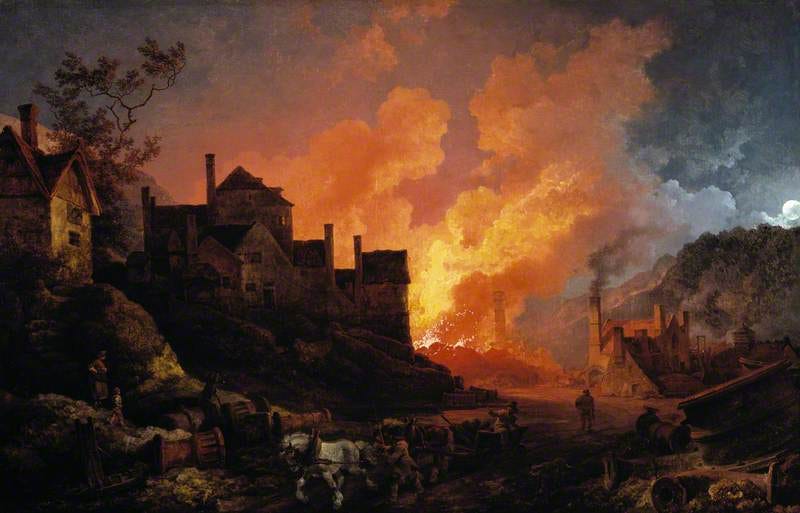
As a closing thought, I want to suggest that our climate crisis is, irreducibly, a temporal crisis, first set ablaze during the Industrial Revolution. The very attempt to come to grips with what is happening to us and through us requires the awakening of a wholly new consciousness of time.
Good thing, then, that this new temporality already seems to be stirring in us.
Postscript
“I don’t know. On Mondays… I think that we are experiencing a discontinuous transition from one world-system to another, a ‘catastrophe.’ On Tuesdays… I feel better and think that it is going to be a transition with continuity, one like the previous transition from medievalism to modernism. On Sundays, I try to rest and seek a contemplative detachment… If I am forced to choose one scenario over the other, I would rather work politically for a cultural transformation with continuity from one world-system to another, than join a survivalist community or wait to be picked up by a flying saucer.”
— William Irwin Thompson, Pacific Shift
So how do you or I live in such impossible, paradoxical times, where time itself seems to have become a thick and imbricated present? In the next installment, I will unpack this inquiry further, but for now I want to suggest that regardless of how the ecological crisis unfolds, regardless of whether or not it will be a catastrophe or a smoother transition from one world system to another, we ought to live as if planetary futures were already present. Real and intimate and substantive.
If the experience of solastalgia can be so transformative, then we ought to keep turning it over while retaining its temporal structure: other, more constructive, futures, planetary futures which, even if they are after an apocalypse, are not vanishing but coalescing, and they too are present. These other futures shape us, and as Mallarme says, ripen from the morrow.
In my manuscript and for convenience, I am calling this the practice of integral futuring. Feel a little bit of discomfort with this science fiction bent? That’s good. We need more mutants right now. More than ever.
If the shape of crisis is fundamentally temporal, entangling past and future, in what ways can we begin living this new cultural mentality in forms that are agentic, constructive, and empowering in the ruins of the neoliberal present?
Maybe this is another way of arriving at Bergson’s central notion of duration.
I’ve long thought about how Herbert was intuiting this new mutation through his science fiction works, although its characteristics tend to show up separately in the Dune world as the planetary ecology of Liet Kynes and the temporal prescience of Paul Atriedes. Prescience allows for Paul to access the past, and as Gebser might describe, the “realm of the Mothers” of the magic and mythic consciousness as well as the future.
I suppose this way of being present may eventually lead to a human evolution that saves us, if our psychology is also engaged with and attentive to spiritual reality that has a telos for good. I personally think so... But can only prove it as I live each day.
"important to keep sifting through our culture’s present-day attempts to name our experience of the ecological crisis and process the feeling of living through a fundamental collapse of worldview." Dystopias have always been the precursor to a new Brave new world. But I don't look forward to that armaggedon. I still prefer to live the best I can, engaged with as much and as many as feels right for me. I think That is why even though I love metaphysical philosophy and speculative cosmology, I keep sticking to my chosen vocation of psychology.